
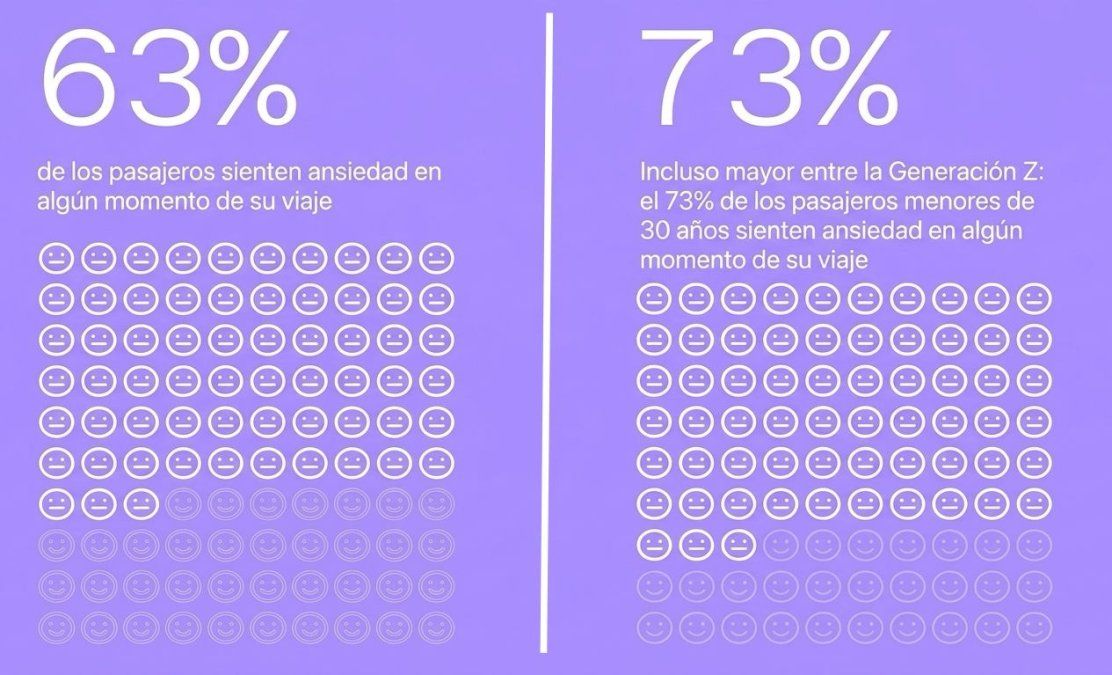
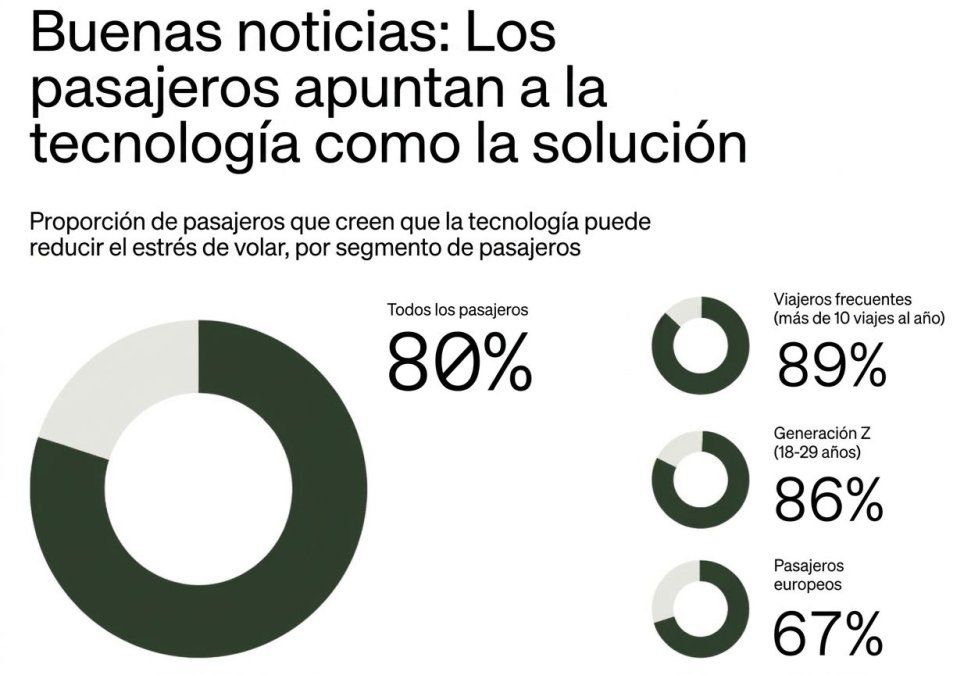
The work compiled the opinions of 8,000 travelers from 24 countries. The good news is that 8 out of 10 respondents are convinced that technology holds the key to solving the problem.
The good news is 8 out of 10 respondents are convinced that technology holds the key to solving the problem.
Stress also affects the most valuable passengers
The situation horizontally affects all consumers, including the most precious to airlines: frequent passengers. According to SITA, 6 out of ten frequent travelers have given up on a trip due to the stress they expected to experience. The same has happened for more than half of travelers under 30 years old, the next generation of frequent flyers.
“Each trip we manage to recover represents a seat occupied, a parking space sold and a coffee purchased,” he said. David Lavorel, CEO of SITA. “Travelers are telling us where their stress comes from: delays, lines and worry about their luggage. Most of it comes down to not knowing what will happen next. “When airlines, airports, ground handling operators and border authorities share the information they have, passengers can know what is about to happen before they have to ask,” the executive added.
Technological tools against stress at SITA
Alerts on passengers’ phones, waiting and walking times updated in real time on airport screens and Artificial Intelligence (AI), which follows each journey and sends an update the moment a change occurs,… all these are just some examples of how technology can help eliminate stress when traveling.
In fact, according to SITA, a large number of passengers are prepared to receive assistance from AI: 4 out of ten would agree to receive real-time updates through this technology, one of the tasks for which they trust it the most.
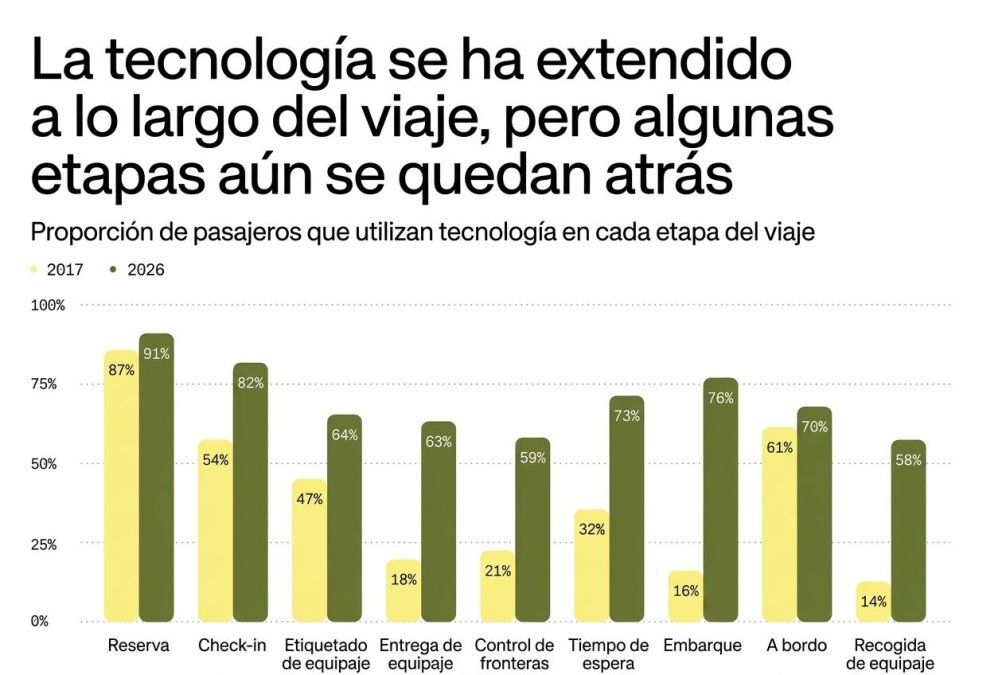
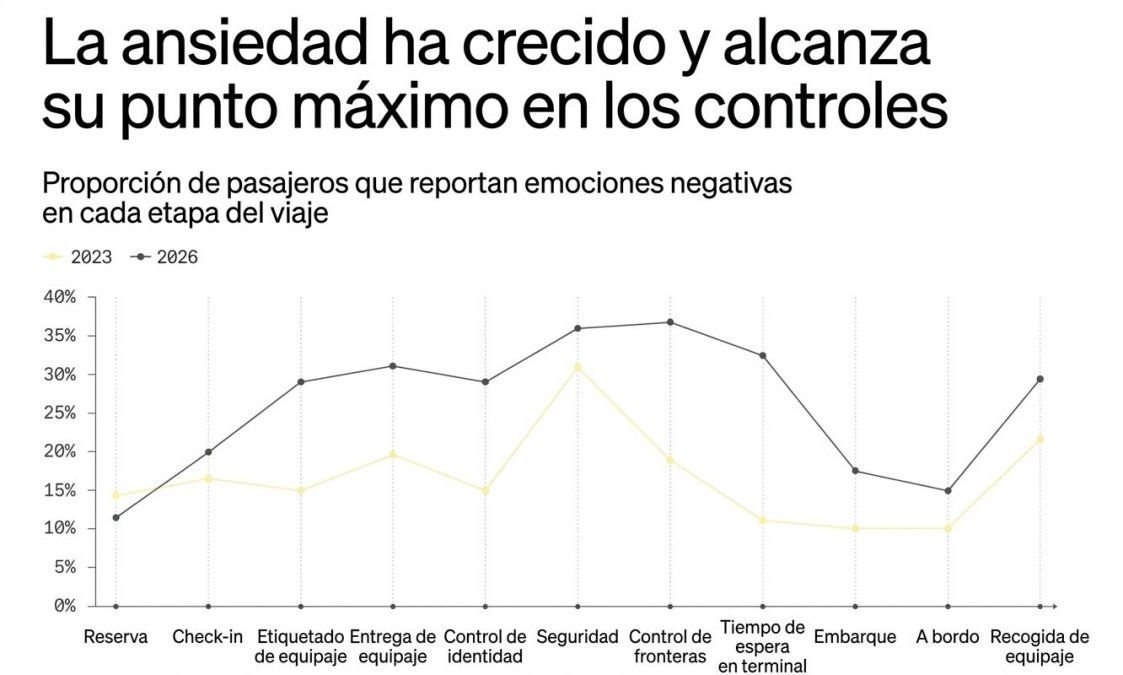
For airports, the main benefit is the time spent in the terminal: the period between security control and boarding, which is shared by the airport, its airlines and the terminal’s shops, restaurants and lounges.. It is also the time of travel when anxiety has increased most rapidly: currently, a third of passengers feel anxious during this stage, a figure three times higher than in 2023.
“At the airport, passengers feel more at ease during check-in and boarding, when the trip is already available on their phones“said Lavorel. “The rest of the journey should offer the same experience, especially when plans change. If a flight schedule is changed, passengers should receive information immediately: the new departure time, how to get to their new gate, and where their luggage is located. That is what allows them to travel with peace of mind,” Lavorel said.
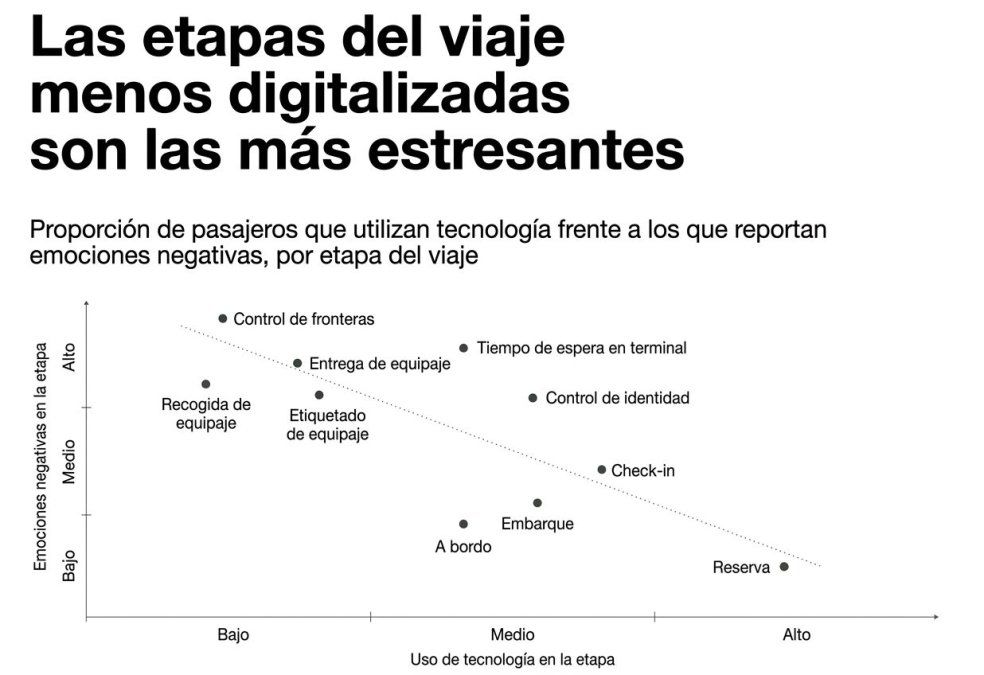
Passengers have also pointed out where the first investment should be made. The problems they most frequently experience are operational in nature: delays, waiting times and baggage management. Most believe that technology can solve them.
“Tranquility is a commercial indicator”stated Lavorel. “Airlines see it reflected in reservations, while airports can see it in the way passengers spend their time once they have passed through security. If we improve the current experience, we can unlock the potential for future demand,” the executive concluded.

Sandra is experienced travel guide expert with a passion for exploration and cultural immersion.